Antarctic Krill Swarms: The Ocean's Cornerstone with a Biomass of 500 Million Tons

Jun 10, 2025 By

The Southern Ocean, a vast and frigid expanse encircling Antarctica, harbors one of the planet's most extraordinary biological phenomena: the Antarctic krill swarm. With an estimated biomass of 500 million tons, these tiny crustaceans form the backbone of the Antarctic marine ecosystem, sustaining everything from whales to seabirds. Their sheer abundance and ecological significance make them a subject of fascination for scientists and conservationists alike.

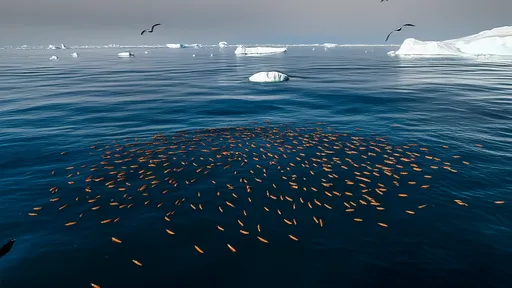
Antarctic krill (Euphausia superba) are small, shrimp-like creatures that gather in dense swarms, sometimes stretching for kilometers. These swarms are so massive they can be detected by satellite imagery, appearing as vast, dark patches in the ocean. Each individual krill measures just a few centimeters in length, but together, they represent one of the largest aggregations of animal biomass on Earth. Their role in the food web is nothing short of foundational.

The keystone of the Antarctic ecosystem

Krill serve as the primary food source for a multitude of species in the Southern Ocean. Baleen whales, such as the blue whale and humpback whale, migrate thousands of miles to feast on these energy-rich crustaceans. Seals, penguins, and seabirds also rely heavily on krill for sustenance. Without them, the entire Antarctic food web would collapse. This makes krill not just a species of interest but a critical linchpin in one of the world's last pristine ecosystems.

Beyond their ecological importance, krill play a significant role in the global carbon cycle. They feed on phytoplankton near the ocean's surface and excrete carbon-rich waste that sinks to the deep sea, effectively sequestering carbon dioxide from the atmosphere. This "biological pump" helps regulate Earth's climate, highlighting yet another reason why krill are indispensable to both marine and planetary health.

Threats to the Antarctic krill population

Despite their staggering numbers, Antarctic krill face mounting pressures from human activities. Climate change is altering the Southern Ocean's temperature and ice cover, disrupting krill breeding and feeding grounds. Warmer waters and reduced sea ice could shrink their habitat, potentially leading to population declines. At the same time, commercial fishing for krill has expanded, driven by demand for omega-3 supplements, aquaculture feed, and other products.

The krill fishing industry operates under the regulation of the Commission for the Conservation of Antarctic Marine Living Resources (CCAMLR), but concerns persist about overharvesting and its long-term effects. Some scientists argue that current catch limits may not account for the compounding impacts of climate change, leaving krill populations vulnerable. The delicate balance between conservation and exploitation is a growing point of contention.

The future of krill conservation

Protecting Antarctic krill requires a multifaceted approach. Strengthening international agreements to limit fishing quotas is a start, but it must be paired with robust monitoring and enforcement. Marine protected areas (MPAs) could safeguard critical krill habitats, ensuring these swarms remain a thriving part of the ecosystem. Researchers are also calling for more comprehensive studies to understand how climate change will affect krill distribution and abundance in the coming decades.

Public awareness is another crucial piece of the puzzle. While krill may not command the same attention as polar bears or coral reefs, their ecological importance cannot be overstated. From supporting iconic wildlife to mitigating climate change, these unassuming creatures are true unsung heroes of the ocean. Their survival is not just a matter of conservation—it's a question of preserving the health of an entire planet.

As we look to the future, the story of Antarctic krill serves as a reminder of the interconnectedness of life on Earth. Their fate is tied to ours, and protecting them means safeguarding the intricate web of life that depends on them. In the end, the resilience of the Southern Ocean—and perhaps our own—may hinge on the survival of these five billion tons of tiny, but mighty, marine architects.
Recommend Posts
Nature

Bison Revival in Yellowstone: The Resurgence of America's Largest Land Animal

By /Jun 10, 2025

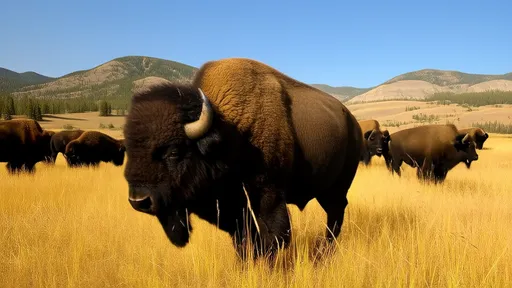
The vast wilderness of Yellowstone National Park serves as a sanctuary for North America's largest land mammal—the American bison. Often mistakenly called buffalo, these iconic creatures have become a symbol of resilience and conservation success. Their story is one of near extinction and remarkable recovery, intertwined with the history of the American West and the evolving understanding of wildlife management.
Nature

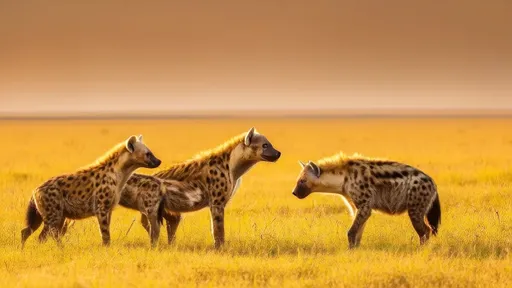
Serengeti Hyenas: Matriarchal Hunting Packs

By /Jun 10, 2025

The vast golden plains of the Serengeti hold many secrets, but few are as fascinating as the complex social dynamics of its spotted hyena clans. These misunderstood predators have long been vilified in popular culture, yet their intricate matriarchal society and highly coordinated hunting strategies reveal a sophistication that rivals even the most celebrated African carnivores.
Nature

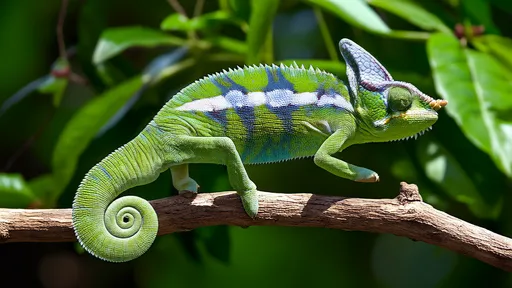
Madagascar Chameleons: A Global Species Treasury Holding Two-Thirds of the World's Species

By /Jun 10, 2025

Deep in the heart of the Indian Ocean lies an island so extraordinary that it defies biological expectations. Madagascar, a landmass accounting for less than 0.5% of Earth’s surface, cradles an astonishing secret within its rainforests, deserts, and mangroves—it is the undisputed kingdom of chameleons. This remote island harbors nearly two-thirds of the world’s chameleon species, a statistic that leaves even seasoned herpetologists breathless. These creatures, with their spiraled tails, independently rotating eyes, and kaleidoscopic skin, are not merely inhabitants of Madagascar; they are living brushstrokes in an evolutionary masterpiece painted over 60 million years of isolation.
Nature

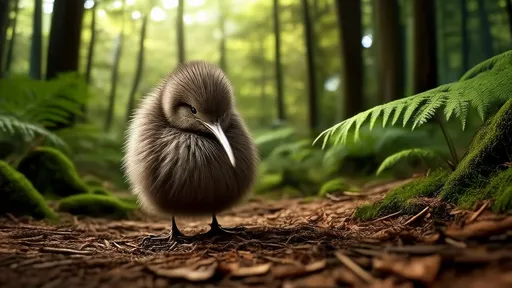
New Zealand Kiwi: Flightless Due to Lack of Predators

By /Jun 10, 2025

The kiwi, New Zealand's iconic flightless bird, stands as a curious testament to evolution's unpredictable whims. Unlike most birds that take to the skies, the kiwi's ancestors abandoned flight entirely, a decision etched into their bones over millennia. This peculiar adaptation raises fascinating questions about how an entire lineage of birds could surrender such a fundamental avian trait. The answer lies in a rare ecological scenario: an island sanctuary so devoid of terrestrial predators that wings became more burden than benefit.
Nature

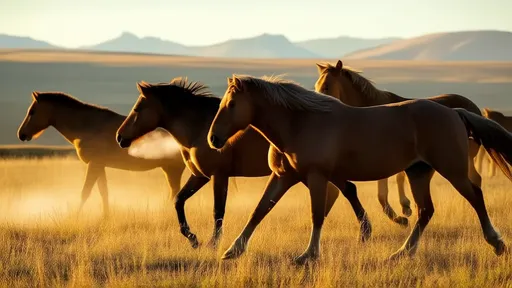
Return of the Mongolian Wild Horse: The Reintroduction Project of Przewalski's Horse"

By /Jun 10, 2025

The vast steppes of Central Asia once teemed with herds of wild horses, their hooves pounding across the grasslands in a rhythmic echo of untamed freedom. Among them, the Przewalski's horse, also known as the Mongolian wild horse, stood as a living relic of prehistoric equine lineage. By the mid-20th century, however, this species had vanished from its native habitat, pushed to the brink of extinction by hunting, habitat loss, and competition with domestic livestock. Its survival hinged on a handful of captive individuals scattered across zoos and reserves. What followed was one of the most ambitious conservation efforts in modern history—a decades-long mission to return the Przewalski's horse to the windswept plains of Mongolia.
Nature

Borneo Orangutans: Last Sanctuaries Under the Threat of Rainforest Deforestation

By /Jun 10, 2025

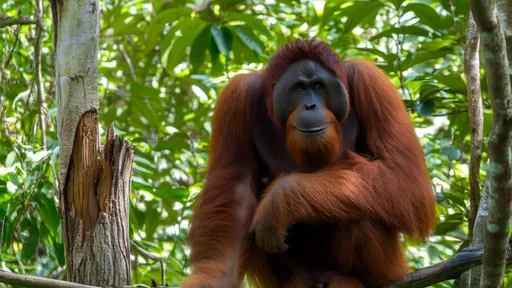
The dense rainforests of Borneo have long been a sanctuary for one of humanity's closest relatives—the Bornean orangutan. With their striking auburn fur and thoughtful, almost human-like expressions, these great apes have captivated researchers and wildlife enthusiasts alike. Yet beneath the emerald canopy that has sheltered them for millennia, a quiet crisis unfolds. Rampant deforestation, driven by palm oil plantations, logging, and agricultural expansion, has pushed these magnificent creatures to the brink of extinction.
Nature

Lemmings of the Arctic Tundra: Regulators at the Bottom of the Food Chain

By /Jun 10, 2025

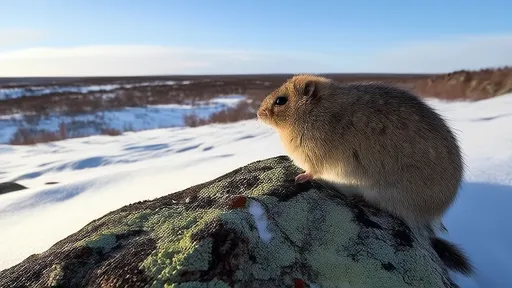
The vast expanse of the Arctic tundra appears barren and lifeless to the untrained eye, but beneath the snow and sparse vegetation thrives one of nature's most fascinating ecological regulators - the humble lemming. These small, furry rodents have captivated scientists for decades not for their size or appearance, but for their disproportionate impact on the entire Arctic food web.
Nature

Gorillas of the Congo Basin: Politics in the Jungle Family

By /Jun 10, 2025

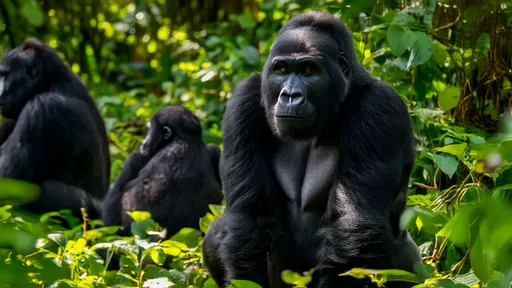
The dense rainforests of the Congo Basin are home to one of nature's most fascinating social structures—the lowland gorilla troops. These majestic creatures, often overshadowed by their mountain-dwelling cousins, exhibit complex family dynamics that mirror human politics in unexpected ways. Unlike the solitary orangutan or the chaotic chimpanzee troops, gorillas thrive in tightly knit family units where power, loyalty, and even diplomacy play crucial roles in daily survival.
Nature

Indochinese Tiger: The Battle Against Poaching in Transboundary Conservation Areas

By /Jun 10, 2025

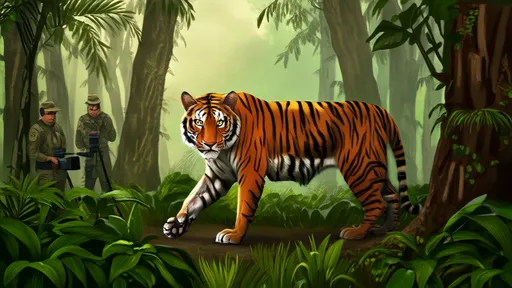
The dense jungles of Southeast Asia have long been home to the Indochinese tiger, a majestic and elusive predator now teetering on the brink of extinction. As conservationists scramble to protect the remaining populations, a complex and often dangerous battle against poaching unfolds across transnational borders. The stakes couldn’t be higher—for the tigers, the ecosystems they inhabit, and the communities that live alongside them.
Nature

Alaskan Brown Bears: Calculating Fat Intake During the Annual Salmon Feast

By /Jun 10, 2025

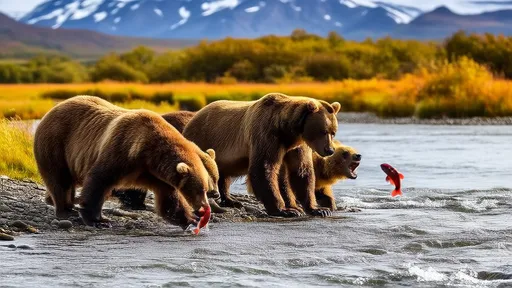
The annual salmon run in Alaska is one of nature's most spectacular events, drawing not only tourists but also the region's most formidable predators: the Alaskan brown bears. These massive creatures rely heavily on the nutrient-rich salmon to fatten up before the long winter hibernation. The relationship between the bears and the salmon is a delicate balance of survival, instinct, and ecological necessity.
Nature

Namibia Desert: Dancing Golden Moles

By /Jun 10, 2025

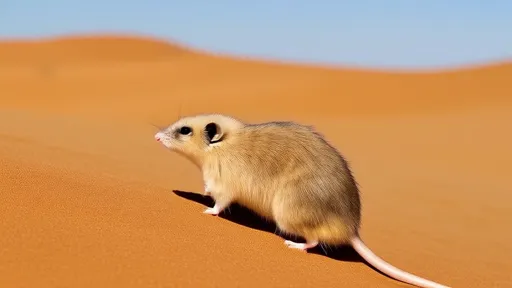
In the heart of Namibia’s vast and unforgiving desert landscape, a tiny, golden-furred creature has captured the fascination of biologists and nature enthusiasts alike. The Namib Desert golden mole, a rare and elusive species, has earned the nickname "the dancing mole" due to its peculiar, almost rhythmic movements across the scorching sands. This enigmatic animal, barely the size of a human palm, has evolved extraordinary adaptations to thrive in one of the harshest environments on Earth.
Nature

Great Barrier Reef Clownfish: A Symbiotic Kindergarten in Sea Anemone Toxins

By /Jun 10, 2025

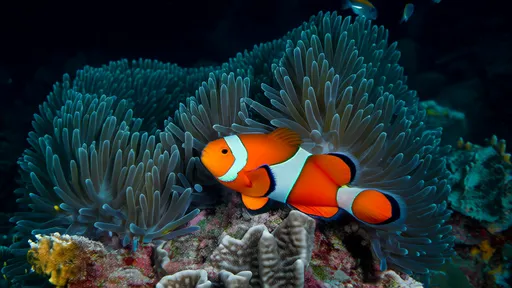
The vibrant coral reefs of Australia's Great Barrier Reef hide countless ecological wonders, but few are as fascinating – or as paradoxical – as the relationship between clownfish and their venomous anemone hosts. These iconic orange-and-white fish don't just survive amidst the stinging tentacles of sea anemones; they thrive there, turning one of the ocean's most dangerous microhabitats into a protected nursery for their young. Recent research reveals this partnership operates with far greater complexity than scientists previously understood, involving biochemical deception, generational knowledge transfer, and a surprising role for anemone venom in clownfish development.
Nature

Paradise Bird of Papua: The Aesthetics of Courtship on the Island of New Guinea

By /Jun 10, 2025

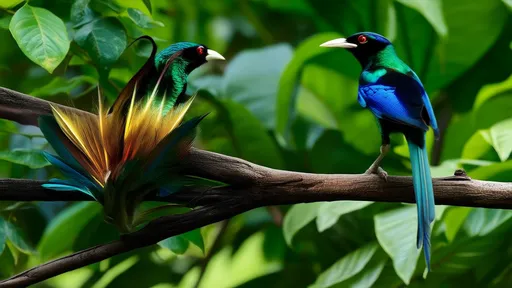
In the dense rainforests of New Guinea, a spectacle of nature unfolds that has captivated scientists and bird enthusiasts alike. The Birds-of-Paradise, particularly the species native to Papua, perform some of the most elaborate and visually stunning courtship rituals in the animal kingdom. These displays are not merely about reproduction; they are a testament to the power of aesthetic evolution, where beauty and artistry play a pivotal role in survival.
Nature

Siberian Permafrost: A Natural Freezer for Mammoth DNA

By /Jun 10, 2025

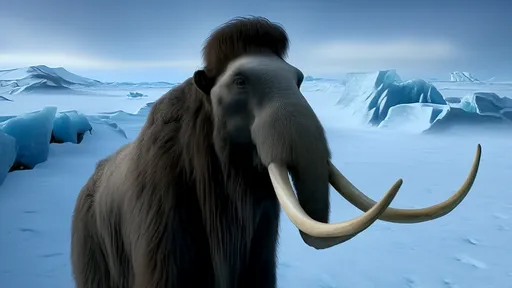
The vast, frozen expanse of Siberia has long been a treasure trove for scientists seeking to unravel the mysteries of prehistoric life. Beneath its icy layers lies a natural time capsule, preserving the remains of creatures that roamed the Earth thousands of years ago. Among these, the woolly mammoth stands out as one of the most iconic symbols of the Ice Age. Recent advancements in genetic research have revealed that Siberia’s permafrost acts as a natural freezer, safeguarding not just bones and tusks but even fragments of DNA from these ancient giants.
Nature

Himalayan Snow Leopard: The Ghost Feline at 5000 Meters Altitude

By /Jun 10, 2025

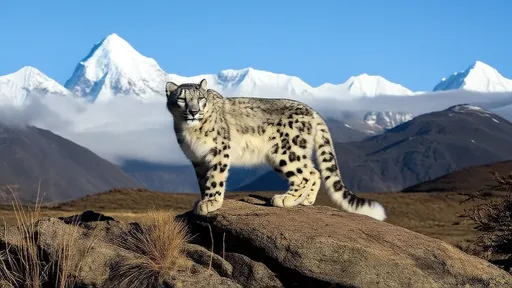
The high-altitude realms of the Himalayas, where the air thins and the temperatures plummet, are home to one of nature’s most elusive predators—the snow leopard. Often referred to as the "ghost of the mountains," this enigmatic big cat roams the rugged terrain at elevations of up to 5,000 meters, its presence more a whisper than a roar. Unlike its more conspicuous feline cousins, the snow leopard thrives in isolation, its survival intricately tied to the harsh, unforgiving landscape it calls home.
Nature

Antarctic Krill Swarms: The Ocean's Cornerstone with a Biomass of 500 Million Tons

By /Jun 10, 2025

The Southern Ocean, a vast and frigid expanse encircling Antarctica, harbors one of the planet's most extraordinary biological phenomena: the Antarctic krill swarm. With an estimated biomass of 500 million tons, these tiny crustaceans form the backbone of the Antarctic marine ecosystem, sustaining everything from whales to seabirds. Their sheer abundance and ecological significance make them a subject of fascination for scientists and conservationists alike.
Nature

The Great East African Migration: The Survival Game of 2 Million Herbivores

By /Jun 10, 2025

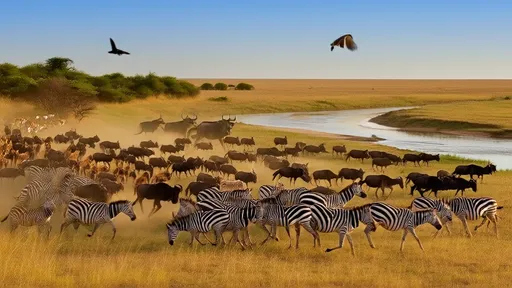
The annual Great Migration across East Africa is one of the most spectacular natural events on the planet. Every year, over two million herbivores—primarily wildebeest, zebras, and gazelles—embark on a treacherous journey in search of greener pastures. This relentless cycle of movement is driven by survival instincts, shaped by the rhythms of rainfall and the ever-present threat of predators. It is a dramatic, unscripted theater of life and death, where every decision can mean the difference between sustenance and starvation.
Nature

Amazon Canopy Kingdom: Undiscovered Species at 30 Meters Above Ground"

By /Jun 10, 2025

The Amazon rainforest, often referred to as the "lungs of the Earth," is a vast and mysterious ecosystem teeming with life. While much of the focus has traditionally been on the forest floor, recent explorations have shifted upwards—into the canopy, a world 30 meters above the ground. This uncharted territory, known as the "tree crown kingdom," is home to a staggering array of unknown species, each playing a vital role in the delicate balance of this biodiverse haven.
Nature

Galapagos Finches: The 13 Beak Types Darwin Missed

By /Jun 10, 2025

The Galápagos finches, often referred to as Darwin's finches, have long been celebrated as one of the most iconic examples of evolution in action. These small, unassuming birds played a pivotal role in shaping Charles Darwin's theory of natural selection during his voyage on the HMS Beagle. Yet, what many don’t realize is that Darwin himself initially overlooked the significance of their beak variations. It wasn’t until later, when ornithologist John Gould identified 13 distinct species among the specimens Darwin brought back, that the true diversity of these finches came to light. The story of these birds is not just about evolution—it’s about how even the most observant minds can miss critical details when the bigger picture isn’t yet clear.
Nature

The Marsupial Dynasty of Australia: A Parallel World Without Placental Mammals

By /Jun 10, 2025

Australia stands as a living testament to nature’s capacity for evolutionary experimentation. While the rest of the world witnessed the rise of placental mammals—creatures like wolves, elephants, and bats—Australia became a sanctuary for an entirely different dynasty: the marsupials. Here, in isolation, these pouch-bearing mammals crafted a parallel world, one where the rules of survival were written not by placentas but by adaptability and resilience.