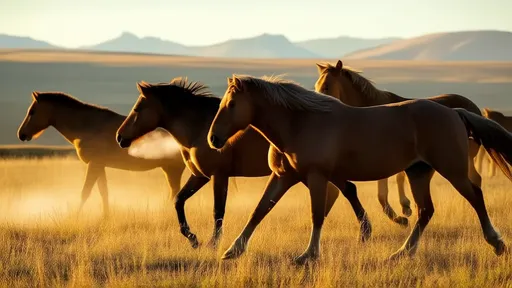
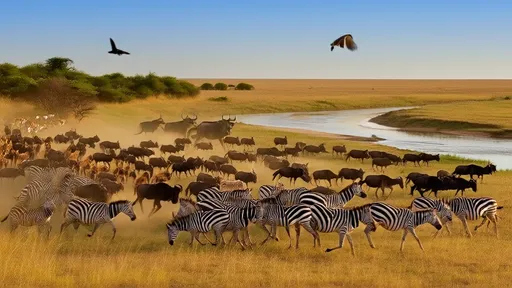
The annual Great Migration across East Africa is one of the most spectacular natural events on the planet. Every year, over two million herbivores—primarily wildebeest, zebras, and gazelles—embark on a treacherous journey in search of greener pastures. This relentless cycle of movement is driven by survival instincts, shaped by the rhythms of rainfall and the ever-present threat of predators. It is a dramatic, unscripted theater of life and death, where every decision can mean the difference between sustenance and starvation.
The migration follows a circular route, spanning the Serengeti in Tanzania and the Masai Mara in Kenya. The herds move in response to seasonal rains, which dictate the growth of fresh grass. From December to March, the southern Serengeti plains become a vast nursery as thousands of wildebeest calves are born. This brief period of abundance is quickly overshadowed by the need to move north as the dry season approaches. By July, the herds face their first major obstacle: the Grumeti River, where crocodiles lie in wait.
Crossing rivers is the most perilous phase of the migration. The Mara River, in particular, has become an iconic yet deadly checkpoint. Thousands of animals gather at its banks, hesitating before plunging into the crocodile-infested waters. Some drown in the chaos, while others are picked off by predators. Yet, the instinct to push forward overrides fear. The ones that survive continue into the Masai Mara, where they graze until the rains return in the south, signaling the start of another cycle.
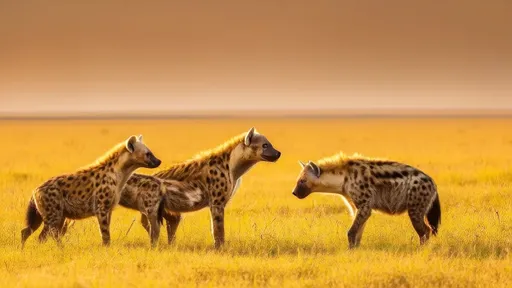
This migration is not just a test of endurance for the herbivores; it is also a lifeline for East Africa’s predators. Lions, cheetahs, hyenas, and wild dogs rely on the migrating herds for food. The abundance of prey during this time leads to fierce competition among carnivores, with some prides of lions even altering their territories to intercept the herds. Scavengers, too, play a crucial role, ensuring that nothing goes to waste in this unforgiving ecosystem.
Human influence has added another layer of complexity to this ancient journey. Expanding agriculture, settlements, and infrastructure have fragmented migration routes. Climate change has disrupted rainfall patterns, making it harder for the herds to predict where and when to move. Conservation efforts are underway to protect these pathways, but the challenge is immense. The survival of the migration depends not only on the animals’ instincts but also on humanity’s willingness to coexist with nature’s grandest spectacle.
The Great Migration is more than just a movement of animals—it is a delicate balance of life, shaped by millions of years of evolution. Each year, the herds face the same challenges, the same predators, and the same rivers. Yet, no two migrations are ever the same. It is a reminder of nature’s resilience and fragility, a drama that continues to unfold, indifferent to the human gaze but utterly dependent on the choices we make.
By /Jun 10, 2025
By /Jun 10, 2025
By /Jun 10, 2025
By /Jun 10, 2025
By /Jun 10, 2025
By /Jun 10, 2025
By /Jun 10, 2025
By /Jun 10, 2025
By /Jun 10, 2025
By /Jun 10, 2025
By /Jun 10, 2025
By /Jun 10, 2025
By /Jun 10, 2025
By /Jun 10, 2025
By /Jun 10, 2025
By /Jun 10, 2025
By /Jun 10, 2025
By /Jun 10, 2025
By /Jun 10, 2025
By /Jun 10, 2025
