Australia stands as a living testament to nature’s capacity for evolutionary experimentation. While the rest of the world witnessed the rise of placental mammals—creatures like wolves, elephants, and bats—Australia became a sanctuary for an entirely different dynasty: the marsupials. Here, in isolation, these pouch-bearing mammals crafted a parallel world, one where the rules of survival were written not by placentas but by adaptability and resilience.
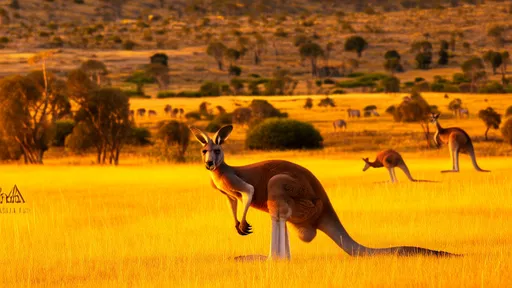
The story begins over 100 million years ago, when Australia was still part of the supercontinent Gondwana. As the landmass drifted away, it carried with it an ancient lineage of mammals that would evolve in near-total seclusion. While placental mammals dominated elsewhere, Australia’s marsupials diversified into niches filled by their placental counterparts on other continents. Kangaroos became the deer of the outback, wombats the badgers of the bush, and the now-extinct thylacine played the role of the wolf.
What makes this evolutionary divergence so remarkable is not just the absence of placental mammals but the sheer creativity of marsupial adaptation. Take the koala, for instance. With its slow metabolism and specialized diet of eucalyptus leaves, it occupies a niche similar to that of sloths in South America. Yet, unlike sloths, koalas developed a unique digestive system to detoxify their poisonous meals. This kind of innovation underscores how marsupials didn’t merely mimic placental mammals—they reinvented the wheel.
The absence of placental competitors allowed marsupials to thrive, but it also left them vulnerable. When humans arrived roughly 65,000 years ago, followed later by European settlers and their introduced species, the delicate balance was shattered. Dogs became dingoes, cats turned feral, and rabbits overran the landscape. These invaders, all placental mammals, outcompeted many native marsupials, driving some to extinction. The thylacine, once the apex predator, vanished in the 20th century, a stark reminder of how quickly an isolated ecosystem can collapse.
Yet, marsupials persist, and their story is far from over. Modern conservation efforts aim to protect species like the bilby and the quokka, while scientists study marsupial biology for insights into human medicine. The kangaroo’s reproductive system, for example, offers clues about fetal development, and the Tasmanian devil’s immune system could hold answers to fighting cancer. In this way, Australia’s marsupial dynasty continues to contribute to the world, even as it faces unprecedented challenges.
Australia’s marsupials are more than just curiosities; they are a window into an alternate evolutionary path. They remind us that the history of life on Earth is not a single narrative but a tapestry of possibilities. In a world where placental mammals reign supreme, Australia stands as a testament to what might have been—and what still could be.
By /Jun 10, 2025
By /Jun 10, 2025
By /Jun 10, 2025
By /Jun 10, 2025
By /Jun 10, 2025
By /Jun 10, 2025
By /Jun 10, 2025
By /Jun 10, 2025
By /Jun 10, 2025
By /Jun 10, 2025
By /Jun 10, 2025
By /Jun 10, 2025
By /Jun 10, 2025
By /Jun 10, 2025
By /Jun 10, 2025
By /Jun 10, 2025
By /Jun 10, 2025
By /Jun 10, 2025
By /Jun 10, 2025
By /Jun 10, 2025
