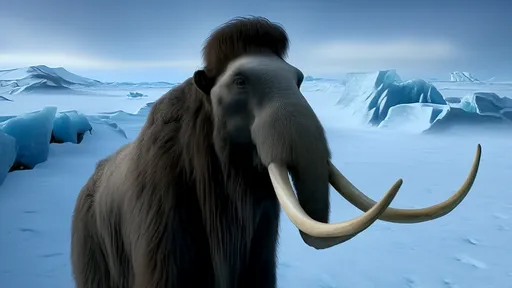
The vast, frozen expanse of Siberia has long been a treasure trove for scientists seeking to unravel the mysteries of prehistoric life. Beneath its icy layers lies a natural time capsule, preserving the remains of creatures that roamed the Earth thousands of years ago. Among these, the woolly mammoth stands out as one of the most iconic symbols of the Ice Age. Recent advancements in genetic research have revealed that Siberia’s permafrost acts as a natural freezer, safeguarding not just bones and tusks but even fragments of DNA from these ancient giants.
For decades, paleontologists have marveled at the near-perfect preservation of mammoth specimens found in the region. Unlike fossils, which are mineralized remains, many Siberian mammoths retain soft tissues, hair, and even blood. This exceptional preservation is due to the unique conditions of the permafrost—a layer of permanently frozen ground that has remained undisturbed for millennia. The cold, stable environment slows down decomposition, effectively turning the Siberian tundra into a biological archive of the Pleistocene epoch.
The discovery of intact mammoth DNA has opened new frontiers in genetic research. Scientists have successfully sequenced large portions of the mammoth genome, providing unprecedented insights into their biology, evolution, and even their potential relationship to modern elephants. What makes Siberia particularly remarkable is that the DNA extracted from these specimens is often of high quality, despite its age. In some cases, the genetic material is so well-preserved that researchers can study gene expression and other molecular details, offering a glimpse into how these animals lived and adapted to their harsh environment.
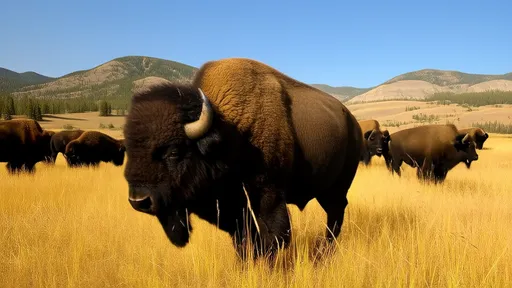
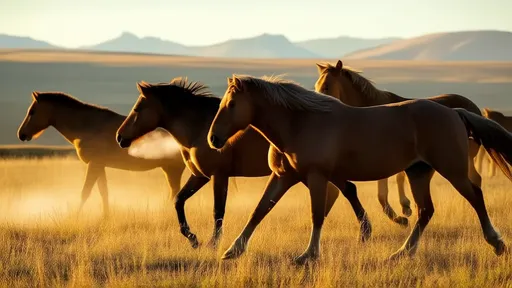
But the permafrost’s role as a DNA deep freeze extends beyond mammoths. Other extinct species, such as the woolly rhinoceros, steppe bison, and even ancient horses, have been found with recoverable genetic material. This has led to a growing field of study known as ancient genomics, where scientists piece together the genetic blueprints of long-lost species. The implications are profound, not just for understanding evolution but also for exploring the possibility of de-extinction—bringing extinct species back to life through advanced biotechnological methods.
However, the very feature that makes Siberia so valuable—its frozen ground—is now under threat. Climate change is causing the permafrost to thaw at an alarming rate, releasing not only ancient DNA but also greenhouse gases like methane. This creates a race against time for researchers scrambling to recover genetic material before it degrades. Expeditions to remote Siberian locations have become more urgent, with teams using cutting-edge technology to extract and preserve samples before they are lost forever.
Ethical questions also arise as science advances. The ability to sequence and potentially resurrect extinct species raises debates about the limits of human intervention in nature. Should we bring back the mammoth, and if so, for what purpose? Some argue that reintroducing such species could help restore damaged ecosystems, while others caution against playing "Ice Age god" with unpredictable consequences. The permafrost’s secrets are forcing us to confront not just scientific challenges but moral ones as well.
Despite these complexities, one thing is certain: Siberia’s frozen landscape remains one of the most extraordinary natural laboratories on Earth. Each new discovery adds another piece to the puzzle of life’s history, offering clues about how species evolve, adapt, and sometimes disappear. As technology improves and more genetic material is uncovered, the dream of peering into the distant past—or even altering the future—becomes increasingly tangible. The permafrost, once seen as a barren wasteland, is now recognized as a scientific goldmine, holding the keys to understanding life itself.
By /Jun 10, 2025
By /Jun 10, 2025
By /Jun 10, 2025
By /Jun 10, 2025
By /Jun 10, 2025
By /Jun 10, 2025
By /Jun 10, 2025
By /Jun 10, 2025
By /Jun 10, 2025
By /Jun 10, 2025
By /Jun 10, 2025
By /Jun 10, 2025
By /Jun 10, 2025
By /Jun 10, 2025
By /Jun 10, 2025
By /Jun 10, 2025
By /Jun 10, 2025
By /Jun 10, 2025
By /Jun 10, 2025
By /Jun 10, 2025
